
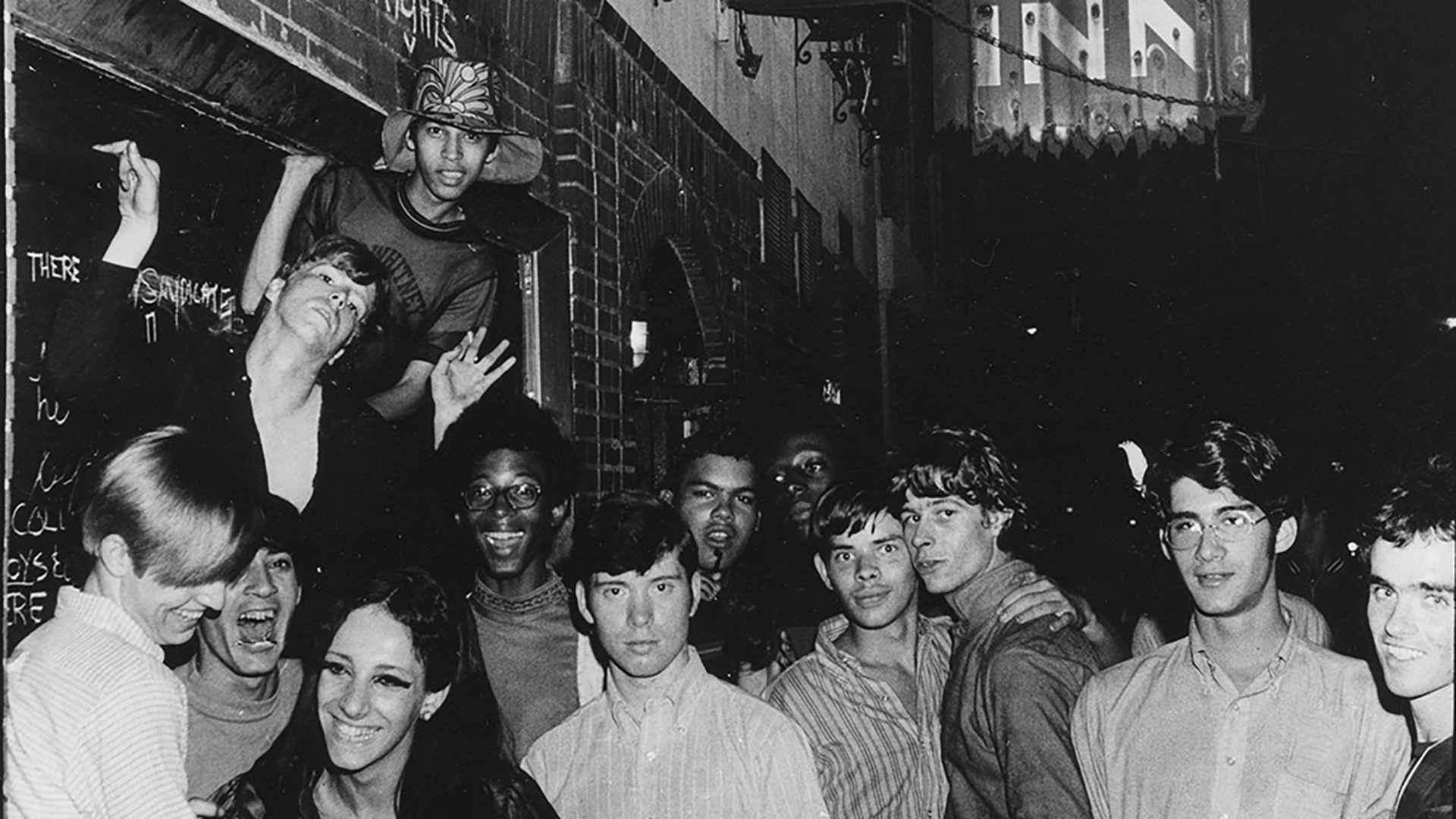
As a man who has done community organizing in the LGBTQ community continuously for 60 years, I am confounded by the mystery of why gender issues have dominated the LGBTQ community over the past decade to the exclusion of nearly everything else. Probably, driven these days by fear-of-missing-out, it has happened on social media sites, in organizations, entertainment outlets, by dominant culture newspapers, publishers, TV, and movies—everywhere, genderdu jour. What was left of the gay and lesbian political movement was diminished, not because of the gender phenomena, but because gay assimilation disappeared gay and lesbian people.
On the one hand, I was baffled. I value the ear I keep to the ground about developments in the LGBTQ community through my contacts with almost every demographic. Other gay men voiced that same concern, albeit privately. Had something big slipped by us without our noticing the magnitude of its presence previously? Also, a new gender language became a sign of mass political correctness without much intellectual and political analysis or informed pushback. Was it just a Warholian 15-minutes-of-fame experience, with a new set of algorithms soon to be streaming through to capture attention and surveillance? Or did it represent something more significant occurring?
On the other hand, I was not baffled. The fog quickly cleared when I regained some historical and cultural clarity again, along with some deeper pondering, which brought understanding. What do I mean? Some LGBTQ history since the early 20th century onward is useful.
A Brief Historical Overview
Throughout the last thousand years in the West, hetero supremacy defined gay reality. Beginning with Walt Whitman (1819-1892) in the U.S. and Karl Heinrich Ulrichs (1825-1895) in Germany, continuing with the German blooming (1890-1933), Edward Carpenter (1844-1929), the Homophiles (1950-1969), Gay Liberation, and many more, there has been a steady evolution of gay centered, gay derived identity that always included gender considerations.
[For my convenience, I’m using the word “gay” here as an umbrella term, unless otherwise noted.]
As a result of the militant Gay Liberation movement (1969-1985), many U.S. colleges and universities in the 1970s were pressured by strident gay and lesbian faculty and students to create gay and lesbian studies programs for the first time, like those of other ignored minority groups. On some campuses, one or two courses sufficed; at other places more robust programs were created. During the Fall of 1969, for instance, a pioneering UCLA Gay Student Union, approved and financially supported by the university, was started on campus. By the early 1980s, pleading lack of funds due to precarious economic stagflation, gay and lesbian studies were diminished and what was left was subsumed into women studies programs on campuses, ending gay visibility and skewing those women’s programs in a new direction with the infusion of an intellectually enriching lesbian consciousness, which grew into newly labeled women and gender studies efforts. Gay Liberation Fronts used a grittier term, “gender fuck,” to voice and manifest its fight against rigid gender roles.
In 1990, Teresa de Lauretis (1938-2026), a lesbian, organized the cutting-edge conference titled “Queer Theory: A Working Conference on Lesbian and Gay Sexualities” held at the University of California Santa Cruz, where she was a faculty member. Also in 1990, Judith Butler, a lesbian theorist at UC Berkeley, published Gender Troubles, which laid out the theory that gender was not binary but fluid and the consequences of that reality. In 1990 as well, Eve Kosofsky Sedgwick (1950-2009) published Epistemology of the Closet. Both books became foundational texts for queer theory, which claimed that an important consciousness and way of seeing occurred at the queer edge of the village. Queer theory spread quickly at universities across the country and became the leading methodology of literary criticism in the U.S. and elsewhere, replacing deconstruction theory.
By the early 21st century, queer theory had spread quickly, and the gender fluid concept held the possibility of an important social revolution. Younger gay and lesbian people began using the word “queer” as an identity, in a queer theory mode. “Queer,” which had been a hate word used in the lexicon of hetero supremacy (“kill the queers”), had been reclaimed and embraced by Gay Liberationists in the 1970s, as had been the words “faggot” and “fairy” (for example, one popular GLF chant in the 1970s: “We’re here! We’re queer! Get used to it!”). In the 1980s, the Queer Nation materialized as a political effort. The 21stcentury use of queer connoted a gender spin.
In 2007, Apple introduced the iPhone, social visual media was accelerated, and the walls came tumbling down. The word “transgender” also appeared, and was given equal billing with queer gender, meaning gender fluidity.
Herbert Marcuse (1898-1979), a member of the 20th century, German branch of philosophy called the Frankfurt School, which helped to shape Angela Davis’s intellect as well as other revolutionaries, observed that whenever anything appeared from the edge that has revolutionary potential, capitalism will quickly coopt and pacify it and make it into a commodity to make money. Marcuse suggested that the commodification process prevents revolutions from occurring in societies controlled by capitalism. It appears that process occurred when gender fluid and transgender were emerging as a threat to the dominant culture.
I have plowed through the key texts, visited important social media sites, and learned from younger teachers on the topic of gender in my search for clarity and understanding over the past decade. Sometimes, the explanations to my mind sounded like scholastic theologians in medieval Europe debating how many angels can fit on the tip of a needle; and sometimes those conversations were a serious political and cultural discussion. At this point, the word “transgender” (usually shortened to “trans”) connotes someone whose chosen identity is the opposite of the sex assigned at birth and is fixed and long lasting, often for life, and has its own gender characteristics. “Gender fluid,” as the name implies, is a chosen gender that fluctuates, is not fixed, over time and situation. Some see gender fluidity as an independent, discreet phenomenon; and others see it as a subset of the larger transgender reality.
Whatever was going on, suddenly, transgender people seemed to be everywhere on social media and in LGBTQ organizations. Lots of money was being made by the sale of books, movies, TV shows, music, clothing, pharmaceuticals—you name it. Pronouns appeared politically important, sometimes seriously, sometimes foolishly. It seemed, the bigger the performance the better. Even hetero men and women began to call themselves queer—the cool, hip thing to be. Queer theory and gender fluidity were being hollowed out.
The two lesbian mothers of queer theory and gender fluidity—Teresa de Lauretis and Judith Butler— critiqued that process and began backing away from what it had become. One critic asked, “When everybody can be queer, is anybody?” Currently, transgender people appear to occupy less space and visibility in the LGBTQ scene than a decade ago. I could be wrong. What is clear, trans ubiquitous visibility is being used by the extreme right wing successfully as the political wedge to go after all LGBTQ people.
Today, however, it seems like the capitalists are finished milking the transgender cash cow for millions and have moved on to milking/bilking the MAGA herd, whose milk contains billions. Could I interest you in buying a God Bless the U.S.A. Bible (aka The Trump Bible) with crypto currency?
How Many Transgender People Really Do Exist?
Some clarity to that question of magnitude has been provided by a 2025 research study titled “How Many Adults and Youth Identify as Transgender in the United States?” by the Williams Institute at the UCLA School of Law. The Williams Institute is a very bright star in the gay community in L.A., but, alas, unknown by LGBTQ people generally. It is the leading research arm for LGBTQ social policy, demographics, legal support studies, and other topics—not just in the U.S., but in the world. The institute’s research feeds my gay intellectual fires.
The data and methodology used by the Williams Institute came from the 2001-2023 Behavior Risk Factor Surveillance System and the Youth Risk Factor Survey (yes, you are being surveilled constantly and relentlessly). That data was put into UCLA’s powerful advanced computer modelling system.
- The results indicated that transgender adults (18 and above) represented 0.8% of the US. adult population.
- Transgender youth (13-17) represented 3.3% of the youth population.
- And when total numbers of individuals (13 and older) are statistically integrated and computed, transgender people represent 1% of the U.S. population, 2.8 million people. From an LGBTQ point of view, that is significant data. From the dominant culture’s POV, it is insignificant. From the hetero supremacist’s vantage point, it is a perfect target.
- When race and ethnicity are considered, there is no statistical differences in transgender people’s distribution in society.
- Class differences were not studied.
A few thoughts and questions grew out of that much needed information.
First, one must handle LGBTQ population estimates very carefully because of the history of hetero supremacists outing gay people with catastrophic consequences, which has made gay people reluctant to share identity information publicly. The estimates of gay men in the population ranges from 2% to 9%. Such a spread suggests proceeding with caution.
Second, none of this data should be used to denigrate gender fluid or transgender people. In Los Angeles, from the beginning of a visible and organized community in 1971, with the founding of the Gay Community Services Center (now called the L.A. LGBT Center), trans people (then differentiated solely by the terms “transvestites” and “transsexuals”—both DSM clinical pathologies at that time) were included under the giant GCSC community umbrella, and a trans program has existed ever since at the Center. This has not always been true in other early gay communities where trans inclusion was sometimes unwelcomed or controversial.
Third, the UCLA study also corroborates what earlier research indicated.
Adolescence (ages 13-17) is the time when gender identity generally is most unstable, adventuresome, and when it finds its largest expression (3.3% of the youth population). It stabilizes and finds its right gender truth as youth enters young adulthood and adulthood (1% overall). As both a gay community organizer and clinician, I find that gender-identity-finding process in young people fascinating, inspiring, and humbling (and sometimes hair-raising). Too little attention has been devoted to this process of gender becoming in the gender fluid and trans experience. There needs to be a larger lens tracking gender fluidity over a lifetime—longitudinal studies—not just experiences restricted to a slice of life called youth and now.
Gender fluidity is why there is a need for extreme caution with labeling young people, particularly with the use of puberty blockers and other hormonal and chemical interventions. The inner emotional and cognitive development of young people is naturally unstable in adult terms, and change and growth occurs over time, reaching some type of inner stability during the person’s 20s and 30s.
There is a boy I have known since birth. At age 10, he told me he was gay and had serial boyfriends. At age 13, he told me he was gender fluid, used they and them pronouns, and had boyfriends and girlfriends. At age 17, he was a young person and had a girlfriend. As he enters his 20s, we shall see what he tells us to see as far as gender and sexual/relational identity is concerned.
I’m very OK with that natural process. One of the advantages of being old is that a person can have a longer perspective and a larger window to see out of, the vision of practicing elders, which complements and supplements the intelligence and experience of youth and adults.
A fourth consideration in the gender politics of the gay community today is its intellectually sloppy use of terms. It seems sometimes as if everyone has abandoned critical thinking. Recently, for instance, I was completing a questionnaire and under “gender” the first choice I was given was “Male or Female.” Those are biological terms, not gender categories. Let me try to shed some light.
- “Sex” is an objective biological category by which an individual is born either male or female (with rare exceptions). It is determined solely by the plumbing between your legs.
- “Gender” is a subjective term and basically is whatever a person tells you their gender is. Every society has gender norms ranging from rigid to flexible. Some cultures have four or five or even seven genders. In some cultures, a religious or ceremonial role is contained in a particular gender role.
- “Sexual orientation” refers to a person’s sexual/relational preference. It can be stable or flexible, generally stable. Alfred Kinsey’s famous scale ranged from “0” (totally hetero) to “7” (totally homo), with gradations in-between. There are situations where one assumes a certain sexual role to survive due to coercive situational force or the need to pretend due to hetero supremacy (prison, hetero marriage, and so forth).
- “Gender fluid” is, as the name implies, someone who defines their own gender regardless of gender norms, and the identity can be situational and changing over time.
- “Transwoman” or “transman” is a person who adopts the identity of the opposite sex and maintains that identity over time. It usually involves surgical, hormonal, and chemical interventions of some type, but not sex reassignment surgery.
- “Transsexual” is a person (“a woman trapped in a man’s body” or “a man trapped in a woman’s body”) who begins to live as a person of the opposite sex through hormonal and chemical interventions for at least a year, then has sex reassignment surgery (the plumbing), followed by living the rest of life as the new opposite sex. Sexual orientation does not change. An example: I worked clinically with a hetero male, sexually attracted to women, who went through the complete transexual sex reassignment process. Her biological category was then “female,” and her sexual orientation was “lesbian,” still sexually/relationally attracted to women. The word “transitioning” means something different for a trans person and a transsexual.
- “Transvestite” or cross-dresser is a person, hetero or homo, who enjoys periodically dressing as the opposite sex.
- “Drag Queen” is a gay man who, in a flamboyant and exaggerated manner, periodically dresses as a female with a certain persona and is publicly performative in some way ranging from biting social commentary to egocentric vamping. The term “drag queen” appears to have originated from two words: a late 19th century British theatrical word describing the dragging sound made by an actress’s long dresses on the stage and a 20th century pejorative word “queen,” alluding to an effeminate gay man. One of my favorite essays on the role of drag queens in the LGBTQ community was written by Christopher Knight, a gay man and the Pulitzer Prize-winning art critic for the Los Angeles Times in a 2023 commentary titled, “How the aesthetics of drag drive the bigots mad.”
There are exceptions to everything said above. Remember: “The exception does not prove the rule.” There is controversy, usually academic in nature, but also in the community, arguing over the correct definitions. Seeing the “trans” word as a work-in-progress is helpful.
Care must be taken by gender fluid and trans people, indeed by all of us, not to fulfill Herbert Marcuse’s teaching that anything of revolutionary potential will be reduced to a capitalist money stream and as a commodity soon to be stripped of meaning and possibility.
No matter what words a people use—freely given or mightily fought for—the weight of those words must always allow humanity to shine through.