
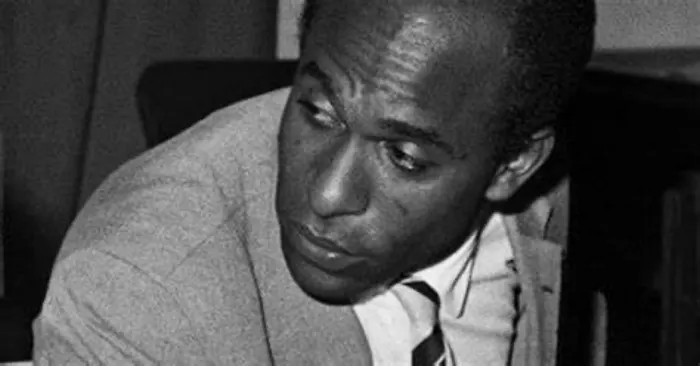
“Each generation must discover its mission, fulfill it or betray it, in relative opacity.”
—Frantz Fanon, The Wretched of the Earth
In 1934, in his novel, Burmese Days, George Orwell wrote, “There is a short period in everyone’s life when his character is fixed forever.” That sentence landed true for me.
Such an eight-year period of fixing my character occurred between 1962 and 1970. While living and traveling in Africa, I was taught and shaped by an Afrocentric worldview (trying to see the world through the eyes of “the Other”). Upon my return from Africa, I deepened my understanding through graduate work in Black history and historiography. The entire eight-year period seeded my life’s work, gay/queer community organizing in the U.S.
In 1962, in my early 20s and part of the first wave of Peace Corps volunteers to go abroad, I began a three-year stint in Ethiopia and taught history at Woizero Siheen Secondary School in Dessie, the only high school in Wollo province, then an area approximately five times the size of Los Angeles County—one high school. In my 12th grade class, there were four young women and 10 young men.
Also teaching at the same school was Vel Nongauza, a South African member of the African National Congress who fled his homeland in 1961 when Nelson Mandela and his comrades with the paramilitary Spear of the Nation were arrested. Emperor Haile Selassie had invited ANC exiles to teach in Ethiopian schools as a way for them to survive.
Also teaching at the high school was Yohannes Admasu, a radical, young poet who had been attending the university in Addis Abeba, but was sent into exile to Dessie when one of his poems could have been interpreted as criticizing the emperor.
Through thoughtful dialogues, Nongauza initiated me into an Afrocentric way of understanding colonialism, neocolonialism, and African liberation struggles. Yohannes Admasu quickly taught me 1,500 years of Ethiopian history, in part, by a grand tour of Ethiopian historical sites, giving me insight into why Ethiopia was the only country in Africa never to be colonized.
 During school vacations, I traveled light and wide-eyed from Egypt, along the Nile, through the Sudan and Eritrea and to newly independent Kenya and Tanzania, living and traveling by means used by ordinary Africans. It was an exciting time to be in Africa with its liberation movements and newly independent countries, then full of possibilities for an auspicious and bright post-colonial future.
My intellectual appetite had been whetted. In 1968, upon my 1965 return to the U.S., I earned an M.A. in history at Howard University because I wanted to be taught Black history by Black teachers. It was at Howard that I encountered Franz Fanon’s Black Skin, White Mask (1952) for the first time. His ideas infused any substantive discussion with fellow graduate students or rabble-rousing at DuPont Circle in D.C.
In 1966, three years before Stonewall, imagine the epiphany of a 26-year-old, white, closeted, gay man wearing a hetero mask—me—reading Fanon’s statement in Black Skin, White Mask:
To be Black and colonized is to inherit a world your
ancestors haven’t made, and to be condemned to
mimicry. An impossible mimicry, because wearing
a white mask will not make you white, much less set
you free; on the contrary, it reinforces alienation and
self-loathing.
By intellectual extension, Fanon’s words forced me to begin grappling with my own gay alienation and self-loathing, trapped at that time in my personal version of “Homo Desire, Hetero Persona.” Fanon’s words—like seeds—were internalized, commencing a long-overdue, conscious confrontation with myself that culminated with Stonewall.
Howard was followed in 1968 by a doctoral fellowship in African and Islamic history at UCLA.
In early 1970, as the around-the-clock manager of the Gay Liberation Front’s office in East Hollywood, I would slip into my sleeping bag each night and spend an hour close reading Fanon’s The Wretched of the Earth (1961), sometimes painstakingly reading one sentence at a time, repeatedly and slowly, until I understood what he was saying. Fanon birthed in me a new way of thinking about and understanding history and fed a flaming Gay Liberation fire within me.
The Revolutionary Lives of Frantz Fanon
Angela Davis declared Fanon to be the “most compelling theorist of racism and colonialism” in the 20th century. Cornel West proclaimed him “the greatest revolutionary intellectual of the mid-twentieth century,” exclaiming further, “He also is the most relevant for the twenty-first century.”
An absorbing, new Fanon biography has appeared, The Rebel’s Clinic: The Revolutionary Lives of Frantz Fanon (Farrar, Straus, Giroux, 2024) by Adam Shatz, the U.S. editor of The London Review of Books. This is not a hagiography. It includes the shadow side of Fanon’s personality as well as his considerable gifts.
 Born in 1925 on the island of Martinique, a French colony in the Caribbean, Fanon wore a White Mask for the first 20 years of his life, believing he was French. Fighting with DeGaulle’s Free French Forces in North Africa and France against the Germans toward the end of World War II, he became disillusioned with the hallowed words Liberte, Egalite, Fraternite, seeing and experiencing them as empty words as far as Black and Arab Africans were concerned. His undergraduate and medical school experiences at the university in Lyon reinforced his contempt for French hypocrisy regarding race and class.
Shatz does a brilliant job of uncovering the sources and maturation of Fanon’s intellectual development that was fed by many streams, including radical Catholicism, existential philosophy, cutting edge social psychiatry as well as various other revolutionary political ideas in post war France. In this period, out of which Black Skin, White Mask was forged, Fanon was, according to Shatz, “a mind on fire.”
It is interesting to note that in the post-war period, Fanon kept his distance from the important negritude movement, founded by Leopold Senghor of Senegal, the Martinican Aime Cesaire, and others, which intellectually and creatively revolutionized how Africans and African Americans were beginning to self-define who they were and reclaim their cultures free of white domination. Fanon snidely commented, “It is the white man who created the Negro, and it is the Negro who creates Negritude,” implying a falsity to negritude.
Much of the last decade of Fanon’s life is a fairly well-known story.
He actively supported the National Liberation Front (FLN) in an exceedingly cruel and violent war of liberation by Algerians against France (1958-1962) and as the FLN’s ambassador to sub-Saharan Black Africa where he became friends of Kwame Nkrumah, president of newly independent Ghana, and Patrice Lumumba, head of the former Belgian Congo, who was murdered with U.S. connivance in order to maintain U.S. control over mineral rich Katanga province during the Cold War.
When Fanon was diagnosed with leukemia in 1960 and came back from briefly successful treatment in Moscow, beginning to sense the end was near, he undertook the Herculean task of writing The Wretched of the Earth, dictated to his friend and confidante, Marie-Jeanne Manuellan, over a grueling three-month period.
 That best-selling book, which was required reading for militant political and cultural activists of my generation, was attacked immediately by “the Establishment” because of Fanon’s advocacy of liberation through violence found in the book’s first chapter, “On Violence,” and in Jean-Paul Sartre’s fiery preface. Fanon’s position was that the colonized were employing “counterviolence” against the “violence” that was initially perpetrated on the colonized. Regarding violence, Malcolm X astutely noted, “The only people who are asked to be non-violent are Black people.”
What deeply touched me emotionally in reading The Rebel’s Clinic, setting the book apart from other biographies of Fanon, is Shatz’s expansive “Epilogue: Specters of Fanon,” benefitting from a historical perspective written six decades after Fanon’s death. The worldwide impact of Fanon’s ideas and writings is incredible. He is read and discussed today everywhere in the world where there is race, class, and gender oppression; where intimations of liberation arise; where intellectual passion regarding colonization and decolonization is needed; in university classrooms; in film, literature, and dance.
Fanon painted a picture of what is possible if we only have the ability to see and the courage to act.
Decolonizing the Gay Mind
A valid question is: What does Fanon have to do with the Gay Liberation movement since he was a practicing hetero supremacist and a misogynist who wrote that women ask to be raped. Fanon’s thinking was a result of the centuries-old, societal indoctrination into hetero supremacy as well as his contemporaneous medical school education. In Black Skin, White Mask, Fanon makes it abundantly clear that “homosexuality” represented a major psychopathology and threat to society that needed to be cured.
Later in the 1950’s, in lectures at the University of Tunis, a close colleague, Alice Cherki, has suggested that Fanon began to soften his rigid hetero supremacist ideology as a result of doing classic Freudian psychoanalysis with an Arab homosexual. In The Rebel’s Clinic, Shatz declares, more generously than I would, that when it came to homosexuality and gender, Fanon was, “certainly not in the vanguard in this regard but not in the reactionary rear guard.” Regardless, like me, Black, queer artists have also been inspired by Fanon’s writings.
Fanon is correctly lionized as a foundational revolutionary theorist. However, often missing from that understanding is a fuller picture of Fanon also as a healer and pragmatic idealist. Through his psychiatric work in France and his role as the director of psychiatric hospitals in Algeria (where during the day he often treated the colonial torturers and secretly at night the FLN loyalists who had been tortured) and in exile in Tunisia (where he pioneered out-patient psychiatric treatment), Fanon worked clinically with the colonized oppressed. Through his clinical work, Fanon came to understand that not only the land, labor, and resources were colonized, but minds were colonized as well. Colonized people were made to feel inferior and uncivilized, dehumanized, and coerced to believe that white, Christian Europeans and Americans had come to civilize and save them from their so-called primitive ways and beliefs.
At the L.A. GLF office, snuggled in my sleeping bag at night, after reading a few pages of The Wretched of the Earth and thinking about what I had just read, I began to understand more fully in revolutionary terms the oppression of gay and lesbian people in Western society. Before Stonewall and continuously for over a thousand years without any let up, gay minds had been colonized by systemic and institutionalized hetero supremacy and Gay Liberation would somehow need to take that fundamental historical fact into consideration.
The struggle was much larger than law reform. Somehow, gay minds needed to be decolonized. And for a gay person living in a territorially-colonized region—like Nigeria or Martinique—there would be a twice-colonized mind—first, land and minds stolen and, second, a gay mind colonized by the false propaganda of hetero supremacy.
As would be expected, that relentless hetero supremacist hatred and violence over time—which falls well within the United Nations’ definition of the word “genocide”—was internalized by gay and lesbian people as shame. No matter the bravado of a privileged few in safe, private settings, pervasively the result was internalized self-hatred, self-denial, and self-destruction by all kinds of means, including alcohol and suicide.
For those who could pass, a hetero mask was permanently pasted onto their faces and survival armor encased their bodies and desires, as they pretended to be someone they were not. Fanon called it “to be condemned to mimicry.” If, through courage or, more likely, by accident, they were unmasked, a high societal price was paid—often death or its living equivalent. The hetero supremacist colonizer had colonized gay minds thoroughly.
Early in 1971, for example, in my L.A. gay community organizing work as chairman of the team creating the pioneering Gay Community Services Center (now the LA LGBT Center), someone advised me that it would be useful to get a certain gay man involved, a nationally noted psychiatrist and former chairman of the department of psychiatry at the UCLA Medical School. I telephoned him, and he agreed to meet. Passionately, I explained to him the need for such a community center, what services it would provide, and its role in creating a visible and organized gay community in Los Angeles. A brief and intelligent dialogue ensued. Finally, he agreed to help under one condition—that the new community center would agree that homosexuality was a psychopathology that needed to be treated.
I sat in stunned silence for a moment, politely thanked him for his time, and moved on. Fanon was right. Colonizers colonized minds. Moreover, hetero supremacist colonizers colonized all gay minds, of the elite as well as of the ordinary.
Fanon suggested further that active participation in the liberation struggle of a people—fighting back, seizing freedom—was an essential part of the process of decolonizing of the mind. He also clinically observed that an important healing of colonized minds occurred through direct action against the oppressor. Stonewall certainly fulfilled that role.
Also, the 1970 Biltmore Rebellion by L.A. GLF was such a liberating effort. When I watch the documentary film of that event—Ken Robinson’s Some of Your Best Friends—I understand the collective importance of that pivotal event in the gay decolonization revolution. The film captured a moment when I walked up to the podium in front of a large audience and seized the microphone from Dr. M. Phillip Feldman, an internationally-known behavioral psychologist, who was presenting on how to cure homosexuality in gay men through aversive conditioning—electric shocks.
When I grabbed the microphone from Dr. Feldman, he assertively grabbed it back. I more forcefully seized the microphone again and informed the room full of psychotherapists that GLF was reconstituting the session to discuss with them their abhorrent and unethical practices—making gay and lesbian people believe they were sick when that was a lie. It worked.
That act in 1970 of taking control of the room and gay people setting their own agenda, seizing the power in the hall, is what Fanon meant when he talked about decolonizing the mind through acts of liberation against the colonizer. Certainly, the takeover had a liberating and healing effect on the 25 GLF gay men and lesbians involved, including my own.
That moment of microphone warfare was not just about L.A. GLF’s direct action that day but was emblematic of what Fanon in The Wretched of the Earth called a “collective awakening”—a revolutionary wake-up call. In essence and by extension that day at the Biltmore Hotel, as a result of a national radio network’s reporting the action, gay people, metaphorically speaking, all over the U.S. were shouting out loud and in their oppressors’ faces that hetero supremacy would no longer rule them. Such Gay Liberation uprisings, large and small, were occurring everywhere in the U.S. and elsewhere during the 1970s.
A Gay Liberation revolution was causing a major realignment of power that was of historic importance. Gay and lesbian people were taking their destiny into their own hands. Importantly for gay people, however, Fanon had also correctly warned that inherent in decolonization other perils to freedom emerge, like elite capture.
Fanon died in 1961 in a U.S. Institute of Medicine hospital in Bethesda, Maryland. He had always avoided the U.S., calling it “a nation of lynchers.” The only known treatment then for his type of leukemia, however, was available only in the U.S. The CIA had allowed Fanon to enter the country for treatment as a goodwill gesture to newly independent Algeria, as part of U.S. Cold War diplomacy. He arrived too late. Fanon’s body was buried in a decolonized Algeria.
I often sadly think about Martin Luther King, Jr., killed at age 39, Malcom X at 39, and Fanon dead at 36—lives cut short in midlife before they had a chance to fully ripen as critically needed, conscious elders in the world. Also, gratitude is always abundantly given for how they politically and spiritually fed me, one of the streams that has shaped and inspired my work in the world.